
Cover Your Hay Before the Weather Costs You
Hay Covering Services
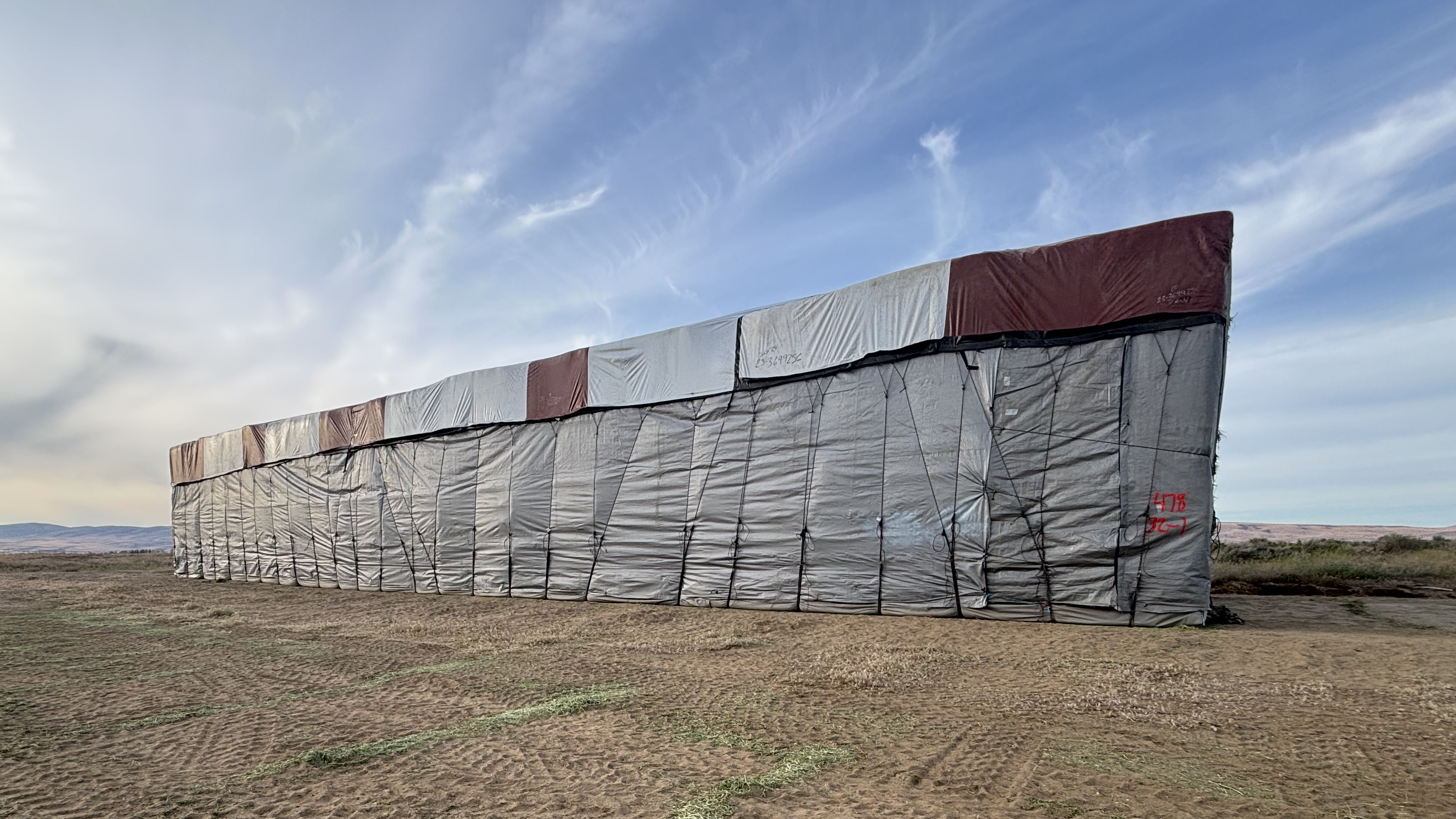
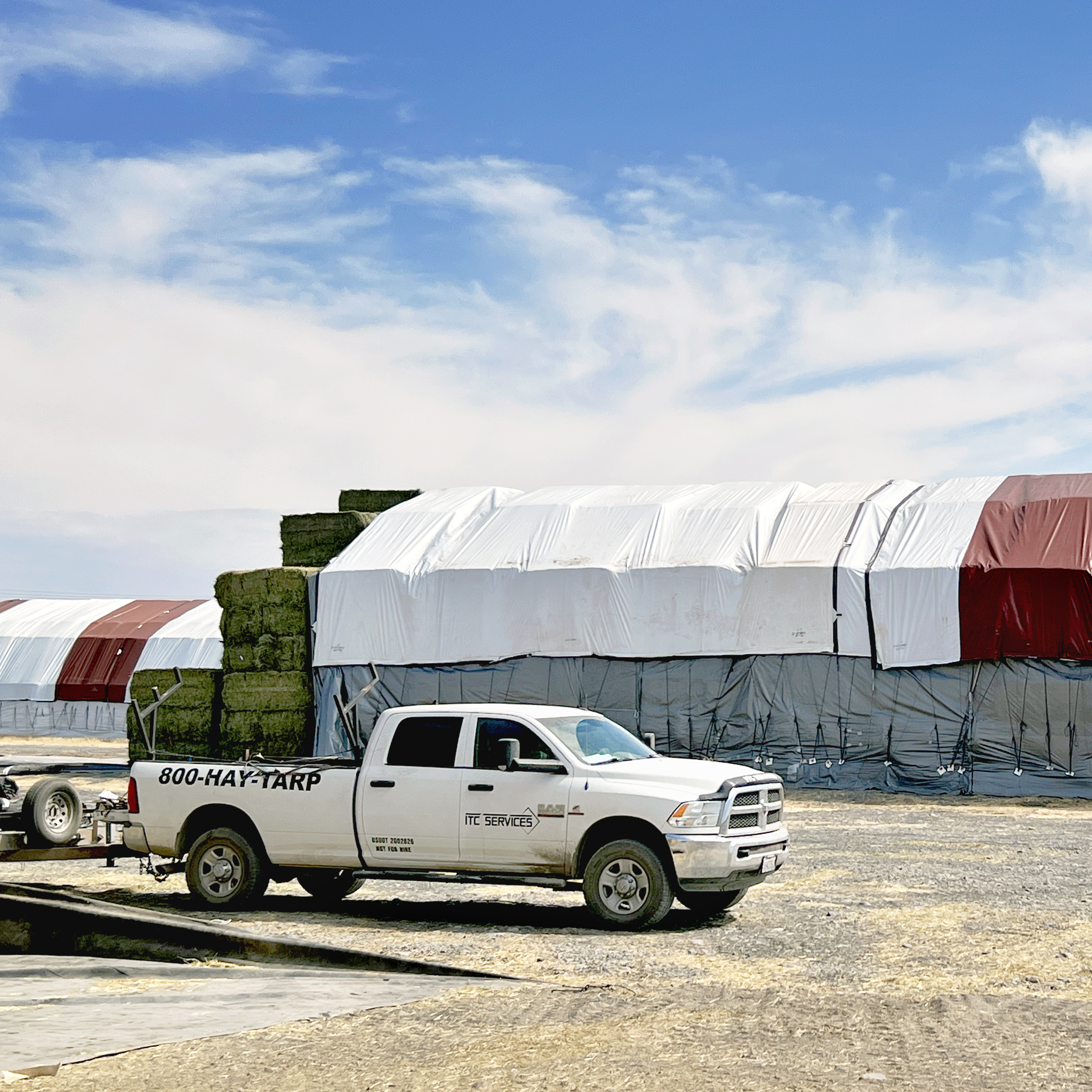
We send a crew to tarp your stacked hay and straw, then come back to tighten, adjust, and pick up when the season's done. You don't have to handle it yourself.
A Crew, Not Just a Tarp
You may have heard this called tarp rental, but dropping off a tarp is the easy part. Our crews come out, cover the stack right, and come back through the season to tighten covers if the wind works them loose. A regional rep helps you plan the job before anyone shows up, so the cover fits your stack, your timing, and your site.
Our crews treat your stack like it's their own hay on the line.
What's Included
From installation through in-season adjustments to final pickup, we keep your hay and straw covered as field and weather conditions change.
Why Cover Hay and Straw?
An uncovered stack loses from two directions. Rain and snow soak in from the top, and ground moisture wicks up from the bottom. Both feed the spoilage that costs you dry matter and quality before the hay is ever fed or sold.
That loss adds up. Hay stored outside and uncovered can give up a real share of the stack to weather, and good covering cuts that loss substantially. The better your hay, the more a cover is worth, because a percentage lost off premium hay costs far more than the same percentage off low-grade.
Whether you're feeding it or selling it, the math runs the same direction. Protect the stack and you protect the dry matter, the grade, and the value you already put into the crop.
Prepare Your Stack for Better Coverage
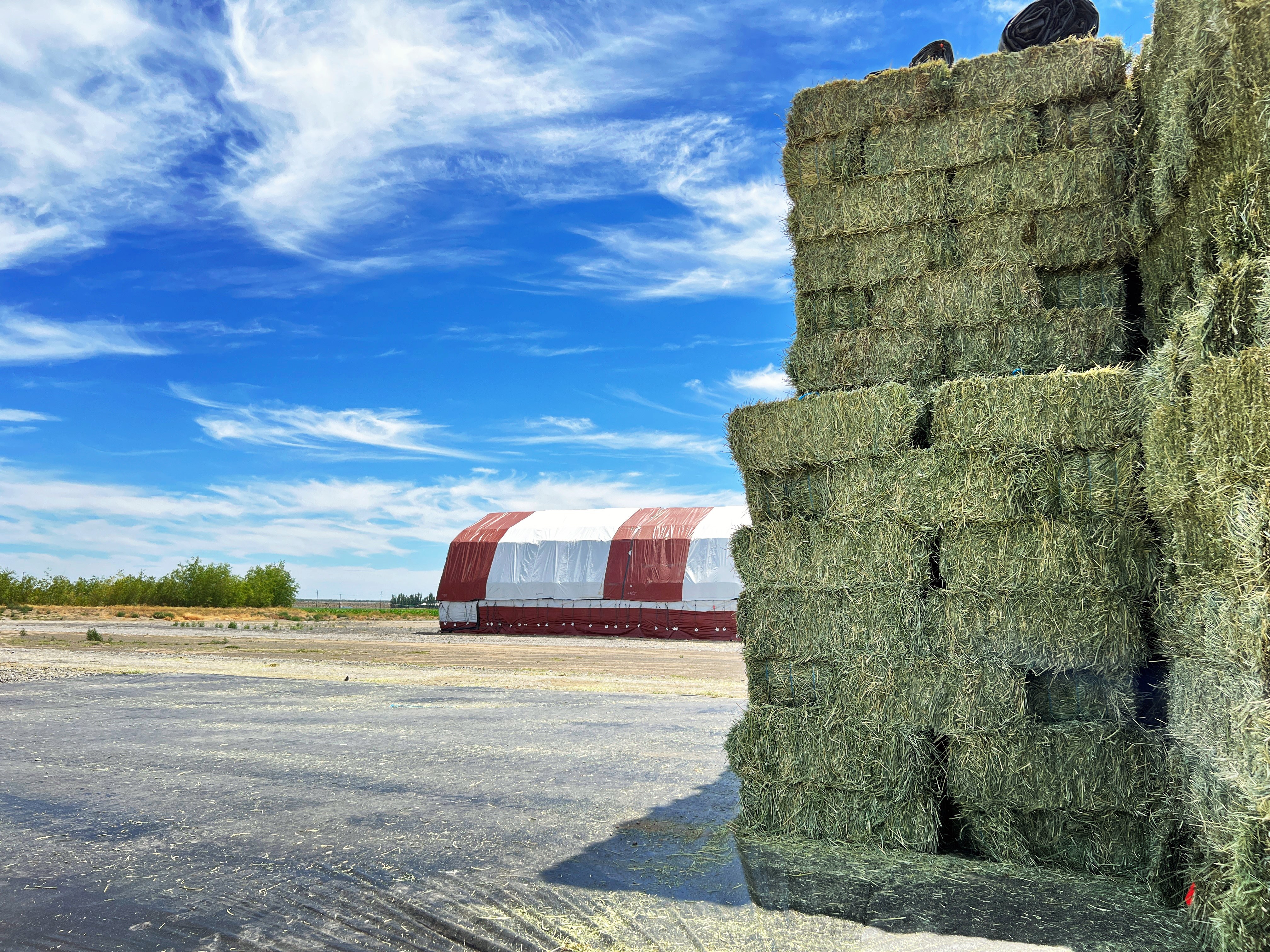
Good coverage starts before the tarp goes on. The way you build and place a stack affects how well it can be covered, and a few choices up front save you trouble later.
Start with shape. A peaked stack sheds water instead of letting it pool on a flat top, and it gives the tarp a better shape for both coverage and airflow. We recommend peaking any stack that will hold through winter or sit through heavy weather, though some bale types and setups do not peak well. Width matters too. It affects how the tarp fits, what coverage options you have, and how much material the job takes, so your bale type and storage time are both worth thinking through before you build.
Mind what is underneath. A lot of the loss on an uncovered stack comes up from the ground, so where you put the stack matters as much as how you build it. Set it on high, well-drained ground, away from low spots where water collects. From there, a high-quality ground tarp can cut the bottom-side moisture that still wicks up, though whether it is worth it depends on your site. Lay it on level, clear ground, and stack carefully so it does not tear or shift underneath.
Know your hay. Some hay wants different handling. First-cutting alfalfa, for one, usually does better with the ends left open, which keeps air moving through the stack while the top stays protected from above. A regional rep can tell you when that applies to yours.
Leave room to work. Our crews bring trucks and equipment, so the stack needs a clear, reachable approach. Keep the area around it open and firm enough to drive on, especially if weather is in the forecast and the ground may soften. If you are not sure whether your site works, mention it when you call and we will sort it out before the crew heads your way.
Call early. The earlier we know your timing, location, and stack needs, the better we can plan the job. When weather is moving in, lead time is the difference between getting covered and getting caught.
Let's Get Your Hay Covered
Tell us about your stack and your timing, and we'll connect you with the regional team for your area. It's a straightforward conversation about what your hay needs, with no obligation to book. ITC Services covers hay and straw across the West and Midwest.
Before you call, it helps to know:
- Stack location
- Approximate stack size and stack pattern
- How long the hay or straw will be stored
- Whether you need covering service, tarp rental, or to purchase tarps
Not ready to call? Find your regional contact and start by email.